Table of Contents
- Why the “Top 10%” Question Matters
- What “Top 10% of XRP Holders” Actually Means
- Where the Numbers Come From and How to Verify Yourself
- So, how much XRP to be in top 10 percent? The Current Ballpark
- Illustrative XRP Holder Percentiles and Balances
- USD Value at Common XRP Price Scenarios
- Strategy: How to Climb Into the Top 10%
- Custody Considerations for Percentile Calculations
- Risks, Caveats, and Rebalancing
- Quick FAQ on XRP Percentiles
Why the “Top 10%” Question Matters
Want a fast way to enter crypto? You can buy bitcoin with credit card in just a few steps using a secure platform that offers instant processing, clear fees, and a smooth user experience.
There’s a simple, compelling reason investors ask how much XRP to be in top 10 percent: it turns a vague idea of “being early” into a measurable milestone. A percentile target helps you calibrate position sizing, benchmark progress over time, and visualize the gap between casual holders and committed participants. It also keeps you grounded in on-chain realities instead of social media narratives.
Percentiles are not investment advice and do not predict future returns, but they can reveal how wealth is distributed across the network. If the threshold to join the top 10% is higher than you expected, it suggests a concentration of balances among relatively fewer, larger accounts. If it’s lower, it may indicate a broad base of small or dormant accounts—useful context when assessing market dynamics.
What “Top 10% of XRP Holders” Actually Means
First, we need to define what “top 10%” measures. In practice, most analyses rank XRP-funded accounts (addresses) by balance and then read the balance at the 90th percentile cut-off. That yields the minimum XRP you’d need to sit at or above the top 10% tier by address count.
However, there are important nuances:
- Addresses versus people: One person can control multiple addresses, and exchanges hold pooled balances for millions of users in a few addresses. Percentiles by address do not equal percentiles by individuals.
- Reserved balances: Each funded XRP Ledger address must lock a base reserve (commonly 10 XRP) plus incremental reserves for additional objects like trust lines and offers. Very small accounts often hold just above the reserve, skewing lower percentiles downward.
- Exchange and institutional wallets: A handful of large custodial wallets concentrate supply, steepening the curve at the high end. This doesn’t change your top 10% threshold by address, but it influences perceptions of distribution.
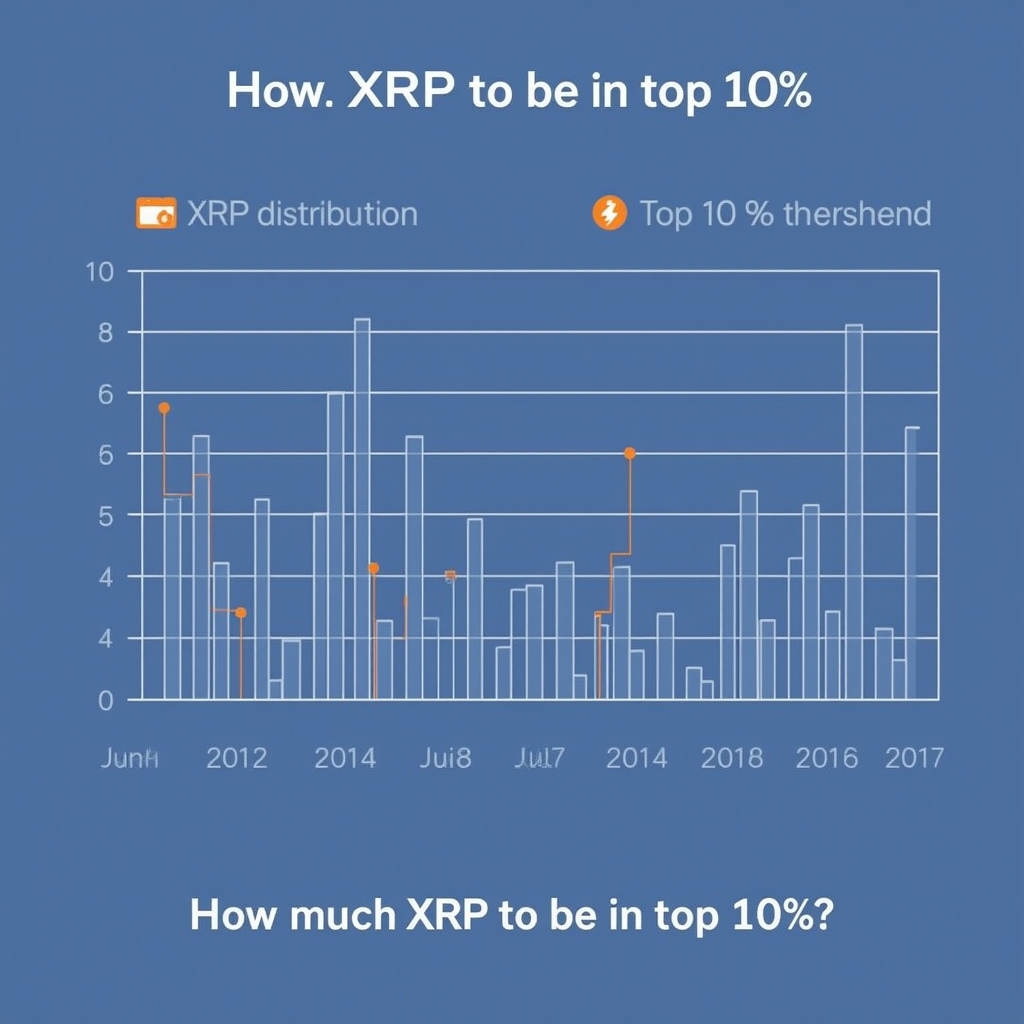
Because of these factors, any “how much XRP to be in top 10 percent” answer is inherently about addresses and snapshots in time. You can and should validate with current on-chain data to get the most accurate figure for the moment you’re deciding.
Where the Numbers Come From and How to Verify Yourself
The cleanest way to estimate the top 10% threshold is to use public XRP Ledger explorers and distribution dashboards. Many provide “rich list” views or percentiles for funded accounts. Even if a site doesn’t show the 90th percentile directly, you can scroll or export data and calculate it.
- Find a reputable data source: Use well-known XRP Ledger explorers and analytics dashboards that list funded accounts and balances.
- Filter for funded accounts only: Exclude empty or unfunded addresses to avoid skew.
- Sort by balance descending: Rank addresses from largest to smallest balance.
- Identify the 90th percentile rank: If there are N funded accounts, the 90th percentile index is around 0.9 × N (counting from the top or bottom consistently).
- Read the balance at that index: The balance at that cut-off approximates how much XRP you need to be in the top 10% by address.
- Repeat across sources and dates: Take multiple snapshots to account for daily flows, new accounts, or exchange reshuffles.
Always timestamp your findings. The XRP supply held by funded accounts, the number of accounts, and the behavior of large custodians all fluctuate. A number you saw posted months ago may no longer reflect the live network.
So, how much XRP to be in top 10 percent? The Current Ballpark
Based on recent on-chain distribution snapshots observed over the past year and typical rich list structures, a reasonable ballpark for how much XRP to be in top 10 percent of addresses often lands in the low-thousands of XRP. In many snapshots, the 90th percentile threshold has clustered roughly in the 1,500–3,000 XRP range.
Why a range? Because the exact threshold depends on:
- The total count of funded accounts that day
- Movements between self-custody and exchanges
- Market cycles that Prompt new small accounts (affecting lower percentiles) or whale consolidation (affecting upper percentiles)
To make this concrete, imagine a snapshot where there are 4.8 million funded accounts. The top 10% cut-off would sit at the 480,000th richest address. In practice, that address might hold around two thousand XRP, give or take, depending on the day’s distribution shape. Treat this as directional, not gospel—then verify with a current explorer before acting.
Illustrative XRP Holder Percentiles and Balances
The following table gives an illustrative (not official) view of how balances can scale across percentiles. It’s intended to help you visualize the curve that puts the top 10% threshold in the low-thousands. Always cross-check live data before making decisions.
| Percentile | Approx. Balance (XRP) | What It Implies |
|---|---|---|
| 50th (Median) | 50–100 | Many small, reserve-level accounts pull the median low. |
| 75th | 300–700 | Quarter of accounts hold a few hundred XRP or more. |
| 90th (Top 10%) | 1,500–3,000 | Common ballpark for “how much XRP to be in top 10 percent.” |
| 95th (Top 5%) | 6,000–12,000 | Getting meaningfully steeper; mid-five figures in USD at higher prices. |
| 99th (Top 1%) | 100,000–250,000+ | Where whales and custodians dominate. |
Note: Ranges are illustrative. Actual thresholds vary with market conditions, address growth, exchange custody changes, and airdrop/trustline behavior.
USD Value at Common XRP Price Scenarios
Knowing the XRP count is useful, but investors also want to understand the fiat exposure implied by that target. Here’s a simple table converting three representative thresholds into USD at different hypothetical XRP prices.
| Threshold (XRP) | At $0.40/XRP | At $1.00/XRP | At $3.00/XRP |
|---|---|---|---|
| 1,500 XRP | $600 | $1,500 | $4,500 |
| 2,100 XRP | $840 | $2,100 | $6,300 |
| 3,000 XRP | $1,200 | $3,000 | $9,000 |
These are not price predictions; they simply translate balances into fiat at selected price points. If your plan is to reach the top 10% threshold, this helps frame DCA pacing, risk budgeting, and opportunity cost versus other allocations.
Strategy: How to Climb Into the Top 10%
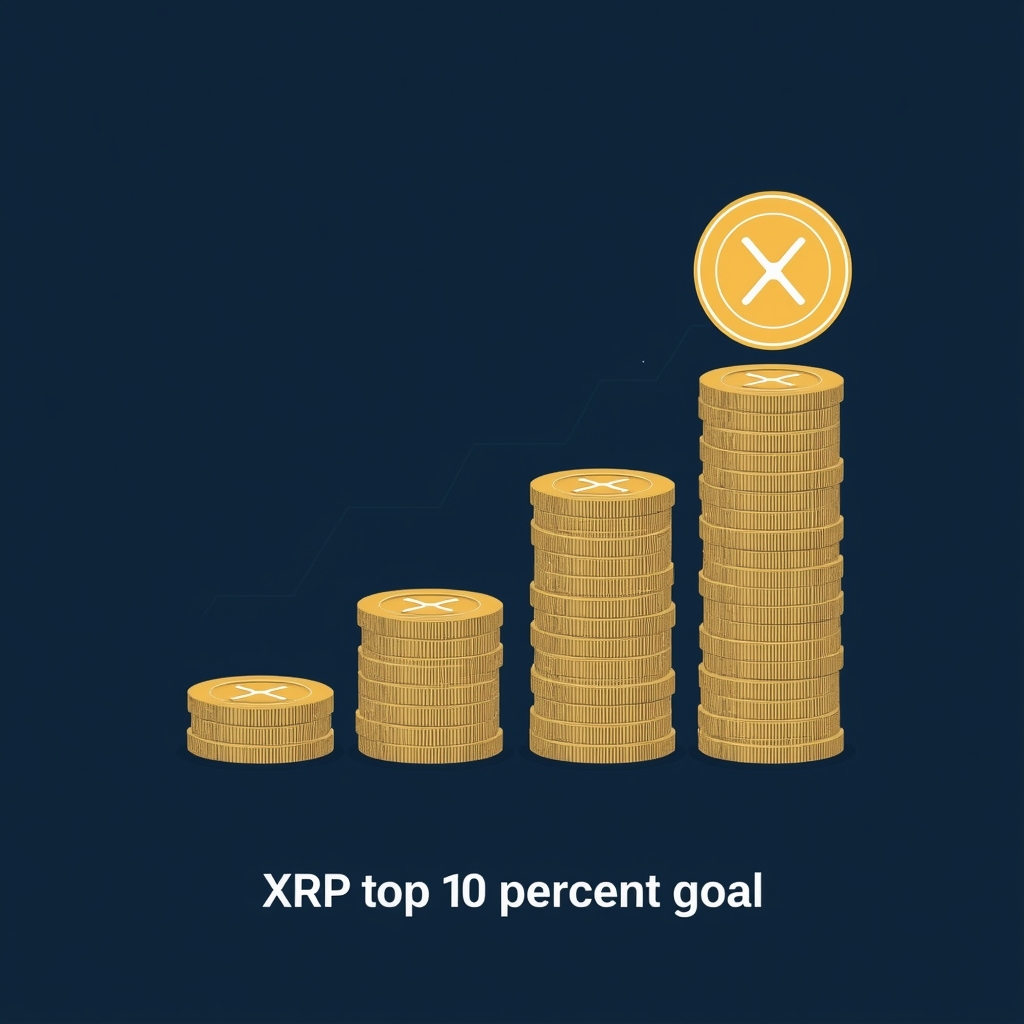
Once you’ve validated how much XRP to be in top 10 percent for the current snapshot, you can map an approach to reach (and keep) that threshold. Consider the following practical levers:
- Dollar-cost averaging (DCA): Smooths entry price and reduces timing stress. Set a weekly or monthly buy that fits your risk budget.
- Fee-aware execution: Compare exchange fees, spreads, and withdrawal costs. For larger purchases, consider limit orders and fee discounts via native tokens or VIP tiers.
- Self-custody readiness: If you want your address counted in the rich list, you’ll need a funded XRP Ledger wallet. Remember the reserve requirement (commonly 10 XRP base) and incremental reserves for each additional object (trust lines, offers, etc.).
- Consolidation versus multiple wallets: A single address that holds your target simplifies percentile tracking; multiple addresses can fragment your balance below the threshold on a per-address basis.
- Security first: Use hardware wallets, strong passphrases, and offline backups. Enable two-factor authentication on exchanges until withdrawal is complete.
- Automate reviews: Set calendar reminders to re-check the live 90th percentile each quarter or after major market moves; adjust your target as needed.
Finally, avoid letting the percentile become the goal at the expense of your broader plan. Ensure the allocation aligns with your risk tolerance, liquidity needs, and portfolio diversification rules.
Custody Considerations for Percentile Calculations
Percentile metrics typically measure balances per on-chain address. That means where you hold your XRP can affect whether you “show up” as top 10% by address:
- Exchanges: Your XRP may be pooled with many users under a small set of large custodian addresses. You won’t register as top 10% individually, even if your share is large.
- Self-custody: Holding XRP in your own funded address makes your balance count directly toward percentile calculations.
- Multiple personal addresses: Splitting funds across several addresses can push each one below the top 10% threshold, even if your combined total would qualify.
None of this changes your economic exposure, but it does affect the “how much XRP to be in top 10 percent” reading that public dashboards will attribute to your address. Decide what matters more to you: private aggregation across multiple wallets or visible standing in a single address.
Risks, Caveats, and Rebalancing
There are clear limitations to using top 10% thresholds as a decision tool. Keep these in view to avoid false precision:
- It’s a snapshot, not a constant: Day-to-day shifts in exchange hot wallets, airdrop activity, or new entrants can nudge the threshold up or down.
- Address count growth: Bull markets often spawn many small accounts just above the reserve, which can lower some percentiles while leaving upper tiers less affected.
- Custodial reshuffles: A single exchange consolidation can move tens of millions of XRP between visible addresses, temporarily distorting distribution charts.
- Not a performance metric: Being in the top 10% by balance does not guarantee returns; it just indicates relative position size among addresses.
- Regulatory and tax friction: Larger positions may carry reporting requirements or tax complexity in your jurisdiction.
Set a rebalancing policy before you hit your target. For example, you might aim to hold the current 90th percentile plus a 10–20% buffer so minor threshold changes don’t knock you out of the tier. If the threshold drops, don’t reflexively add more unless it still fits your risk plan.
Quick FAQ on XRP Percentiles
Is the top 10% threshold the same across all explorers? Not always. Differences in data freshness, treatment of unfunded addresses, or clustering of custodial wallets can yield modest discrepancies. Cross-check multiple sources.
Does being in the top 10% make me a whale? No. Many networks have a steep distribution curve. True whales usually reside in the top 1% (or even top 0.1%). The top 10% is better described as “serious holder” territory.
Can I game the percentile by splitting or merging wallets? You can change your address-level standing by consolidating or splitting funds, but that doesn’t change network-wide distribution. If your goal is visibility in the rich list, consolidation helps. If your goal is privacy and operational security, multiple wallets may be preferable.
How often should I check how much XRP to be in top 10 percent? Quarterly is a good baseline. Also check after notable market moves, exchange incidents, or large airdrop/trustline events that may create or fund many small accounts.
What about staking or DeFi? The XRP Ledger’s native functions differ from EVM staking norms. If you interact with protocols via wrapped assets or through bridges, your visible L1 XRP balance may drop even if your total exposure doesn’t. Track all positions holistically.
Is the reserve going to change? The base reserve has changed in the past through governance. If it increases or decreases, it can subtly affect how many low-balance accounts exist and, therefore, some percentile shapes—though effects on the top 10% threshold are usually small compared with exchange custody flows and market cycles.
Should I target a fixed XRP count or a percentage of net worth? Percentiles are a relative network measure; position sizing should be an absolute personal finance decision. Many investors combine both: maintain a risk-appropriate allocation while keeping an eye on where that sits relative to the network’s distribution tiers.